
INTRODUCTORY SPEAKER:
Alain R. Roy will present on “BAPE: 50 Years of Participatory Democracy.” In an era of misinformation, how can public trust be maintained? BAPE puts forward concrete ways to strengthen the role of information in the environmental assessment process.
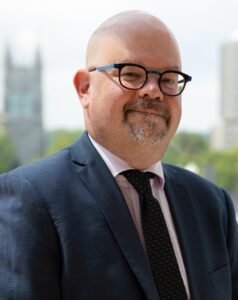
Chair of the Bureau d’audiences publiques sur l’environnement (BAPE) since 2023, Alain R. Roy holds a law degree, a master’s degree in law, and a master’s degree in history. He has taught at the Québec Bar and the Université of Sherbrooke and has also worked as an advisor in municipal ethics and professional conduct.
Appointed member and administrative judge of the Quebec Municipal Commission in 2017, he holds solid experience at the intersection of law, public administration and ethics.
Author of two books on municipal governance, he has built recognized expertise for more than 15 years in key positions within the municipal sector.
KEYNOTE:
Professor Rémi Quirion and Timothy Caulfield will kick off the conference with their talk “Science, Trust, and Turbulence: Confronting Misinformation in Impact Assessment.” In an era marked by social media and increasing polarization, misinformation disrupts risk perception, public trust, and the quality of evidence‑based decision making. Within the context of impact assessments, it weakens participatory processes and institutional legitimacy. This conversation will explore current vectors of mis- and disinformation, their effects on impact studies, and concrete strategies to address them, including preventive communication, methodological transparency, and practitioner training. The discussion will highlight ways to integrate these approaches into existing assessment frameworks and strengthen the resilience of communities and institutions faced with controversies amplified by artificial intelligence and digital platforms.
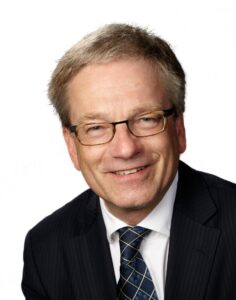
Professor Rémi Quirion is the inaugural Chief Scientist of Quebec since July 2011, and has been elected President of the International Network for Governmental Science Advice (INGSA) in 2021. As McGill Full Professor, Psychiatry and outgoing Scientific Director at the Douglas Mental Health University Institute, he served as Vice-Dean, Faculty of Medicine at McGill University, as well as Senior University Advisor (Health Sciences Research) in addition to being the CIHR Executive Director, for Alzheimer’s Diseases, from 2009 to 2011. Prof. Quirion was the inaugural Scientific Director of the Institute of Neurosciences, Mental Health and Addiction (INMHA) until March 2009. Since 2011, he is the President of the three Board of Directors of the Fonds de recherche du Québec.
In addition to being on the Advisory Board of over 15 journals in Psychiatry, Pharmacology, and Neurosciences, he has published 5 books, more than 650 scientific papers and articles.
Rémi Quirion has received many awards and recognitions including Officer of the Order of Canada in 2007. He is a Fellow of the Royal Society of Canada, Fellow of the Canadian Academy of Health Sciences, a Knight of the Ordre national du Québec and a Knight of the Ordre de la Pléiade. He is a member of the Canadian Medical Hall of Fame, the Académie Nationale de Médecine de France and the International Council of Science.
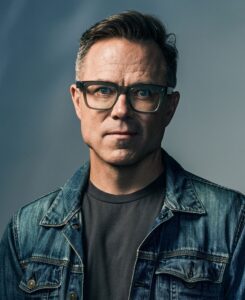
Timothy Caulfield is a Professor in the Faculty of Law and the School of Public Health, and Research Director of the Health Law Institute at the University of Alberta. He was the Canada Research Chair in Health Law and Policy for over 20 years (2002 – 2023). His interdisciplinary research on topics like health and science policy, health misinformation, and public representations of science have allowed him to publish over 400 academic articles. He has won numerous academic, science communication, and writing awards, and is a Member of the Order Canada and a Fellow of the Royal Society of Canada, the Canadian Academy of Health Sciences, and the Committee for Skeptical Inquiry. He is also an honorary Fellow of the Royal College of Physicians and Surgeons of Canada.
He contributes frequently to the popular press and is the author of national bestsellers, including: The Cure for Everything: Untangling the Twisted Messages about Health, Fitness and Happiness (Penguin 2012); Is Gwyneth Paltrow Wrong About Everything?: When Celebrity Culture and Science Clash (Penguin 2015), and Relax, Dammit!: A User’s Guide to the Age of Anxiety (Penguin Random House, 2020). His most recent book, a #1 national bestseller, is The Certainty Illusion: What You Don’t Know and Why It Matters (Penguin Random House, 2025). Caulfield is also the co-founder of the science engagement initiative #ScienceUpFirst and has written, hosted and produced documentaries, including the award-winning TV show, A User’s Guide to Cheating Death, which has been shown in over 60 countries, including streaming on Netflix in North America.
KEYNOTE:
Neuroscientist and cyberpsychologist Mélissa Canseliet presents “We Are Not Naive. We Are Human. Neuroscience and cyberpsychology of misinformation.”
We already know misinformation, its mechanics, its actors, its damage. What you know less is what happens inside: why a healthy, educated, engaged brain falls for it. This talk isn’t about conspiracy theorists, it’s about the direct target of misinformation, yet the most underused protection we can build: our brain, and what science offers us as leverage to act differently.
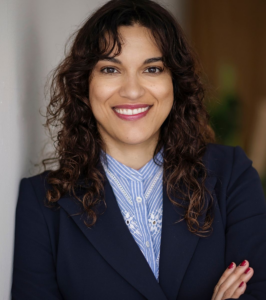
Mélissa Canseliet is a neuroscientist and cyberpsychologist with a Master’s in cognitive psychopharmacology and four years of research at Oxford, turned entrepreneur, TEDx speaker, and author of Génération écrans.
Over 14 years in the tech industry (Ubisoft, Samsung Ads, Mistplay) gave her a front-row seat to how digital environments are engineered to shape human behavior. She now dedicates her work to helping organizations understand what happens inside the brain when information, and misinformation, travels through screens.
For this conference, she turns that lens on us.